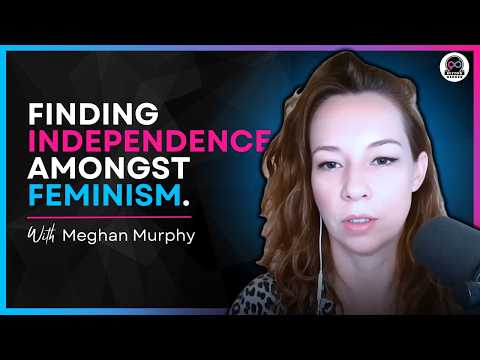
Meghan Murphy
Feminist writer and founder of Feminist Current
Meghan Murphy paid a professional price for gender-critical dissent long before it had a name. As founder of Feminist Current and one of the first prominent voices banned from Twitter for stating that men are not women, she charted a path that European feminists — navigating stricter hate-speech laws and more entrenched academic orthodoxy — are still being forced to walk.
Meghan Murphy is a Canadian journalist and the founder of Feminist Current, one of the first English-language platforms to sustain feminist criticism of gender ideology. Writing and podcasting when such criticism was being pushed out of left-liberal spaces, she documented how women's studies departments were reorienting around gender identity theory rather than sex-based analysis — a shift already well advanced in European universities from Stockholm to Amsterdam.
In 2018 she became one of the first prominent commentators permanently banned from Twitter for stating that men are not women. In the episode Meghan Murphy on Third-Wave Feminism, Cancel Culture, and the Tweet That Got Her Banned, she recounts not only the ban itself but the earlier professional isolation — dissent from gender orthodoxy carrying reputational costs years before most people knew the debate existed. For European listeners, the trajectory is immediately legible: in Germany, France, and the Netherlands, hate-speech legislation gives platform-style silencing a formal legal infrastructure, raising the stakes considerably beyond anything Murphy faced in Canada.
Her analysis of third-wave feminism — how it traded a material understanding of sex for identity and self-expression — maps onto European academic history with uncomfortable precision. The Nordic countries have funded gender-studies programmes generously for decades; EU institutions have embedded gender-identity frameworks into equality policy as standard. The pattern Murphy describes did not travel from America: it has deep European roots, and her account offers continental feminists a language for naming what has already happened to their own disciplines and institutions.